



The distribution of freshwater fish in Malaysia is categorized into two zoogeographic regions, Peninsular Malaysia and the Bornean states of Sabah and Sarawak (Hashim et al., 2012). Fish biodiversity refers to the variety of fish species present within a specific environment (Lisbeth, 2023). Sarawak, a Malaysian state located in the northern region of Borneo, is noted for its exceptionally high biodiversity. To date, a total of 564 fish species, classified into 123 families and 32 orders, have been documented in the waters of Sarawak. Among these, freshwater fish species account for 48.0% of the total, followed by marine species at 36.6%, marine-euryhaline species at 12.9%, and brackish water species at 2.5% (Abu Hena et al., 2022). However, despite its significance, the knowledge and documentation of fish biodiversity in Sarawak remain insufficient (Chong et al., 2010), particularly for freshwater ecosystems. Freshwater ecosystems are considered some of the most vulnerable environments on Earth, with land-use change posing a significant threat to their integrity (Azahar et al., 2021).
The Nirwana Forest Reserve, located within the Universiti Putra Malaysia Bintulu Campus (UPMKB), represents a critical yet underexplored freshwater ecosystem in Sarawak. UPMKB is a satellite campus of Universiti Putra Malaysia situated in Bintulu, Sarawak, and is one of the leading institutions in the region for agricultural and environmental education. Covering approximately 95 hectares, the Nirwana Forest Reserve contains a network of interconnected freshwater streams that are part of the Batang Kemena River Basin in northern Sarawak. The streams within this reserve flow through relatively undisturbed areas of the forest, providing critical habitats for a variety of aquatic flora and fauna, including fish.
Rivers and streams are typically divided into upper, middle, and lower sections, each characterized by distinct environmental features and species composition (Abit et al., 2012). The riverine system within UPMKB encompasses both upper and middle sections, making it a unique site for studying freshwater fish biodiversity. These streams have long served as a vital educational resource for students and educators in aquatic biology. Their accessibility provides ample opportunities for hands-on learning and research on freshwater biodiversity.
Despite its significance as an aquatic educational resource, the fish biodiversity within the UPMKB riverine system has not been thoroughly documented. Over the years, various man-made structures and human activities have altered parts of this riverine system, particularly in the middle and lower reaches. River shrinkage and habitat modification are common issues in urban and semi-urban environments, leading to the degradation of aquatic ecosystems and a significant reduction in biological diversity (Lu et al., 2021). Given the ongoing threats to freshwater ecosystems, documenting the existing fish biodiversity in UPMKB is crucial not only for academic purposes but also for conservation and management efforts.
The absence of comprehensive baseline data on freshwater fish species in UPMKB poses a challenge for biodiversity conservation and sustainable campus management. Without proper documentation, assessing the impact of environmental changes and human activities on the local fish population is difficult. Therefore, this study aims to provide the first formal documentation of freshwater fish species within the UPMKB riverine system. The primary objectives are to identify and catalog the fish species present, determine the relative abundance of native versus non-native species, and assess the conservation status of each species based on the International Union for Conservation of Nature (IUCN) Red List.
The data generated from this study will serve multiple purposes. First, it will provide a valuable reference for future research on freshwater biodiversity in Sarawak. Second, it will enhance the educational experience for students at UPMKB by offering a more detailed understanding of the local aquatic ecosystem. Finally, it will contribute to the broader goal of freshwater biodiversity conservation in Sarawak by identifying vulnerable and near-threatened species that may require protection. The presence and abundance of non-native species often correlate with changes in community composition, functional roles, trait occurrences, and ecological niche spaces. This will further enrich the educational experience for students at UPMKB, providing a solid baseline for aspiring aquatic biologists.
2. Materials and Methods
2.1 Ethical approval
No ethical approval was required to conduct the study.
2.2 Study site
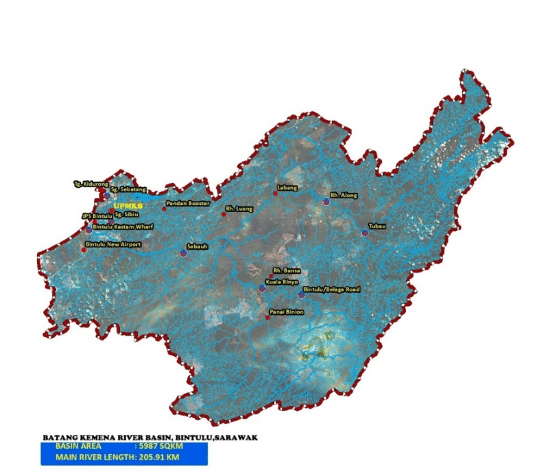
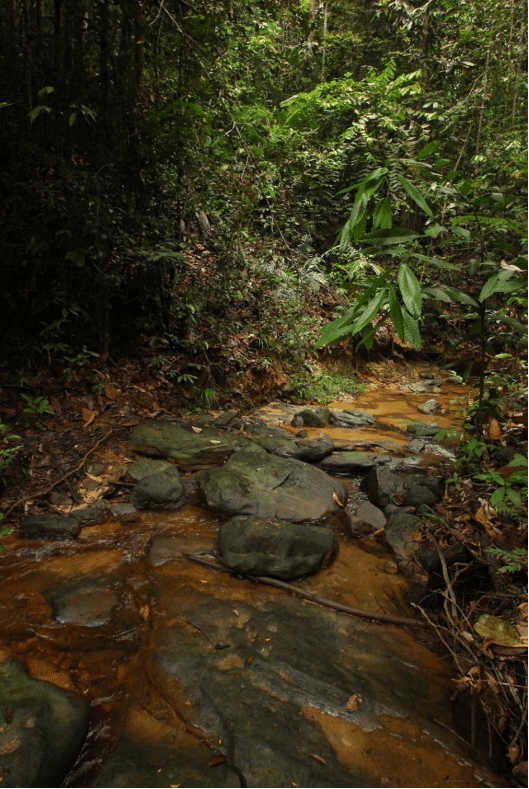
The sampling for this study was conducted during practical sessions of the Principles of Aquaculture course for the Diploma in Fisheries program at UPMKB from 2018 to 2023. Fish samples were collected from 10 different stations within the UPMKB riverine system, specifically the Batang Kemena River Basin in Northern Sarawak (Figure 1). This river system encompasses the upper and middle sections of a typical riverine system (Figure 2).
2.3 Sample collection and identification
A variety of methods were used to capture fish samples, including electrofishing, baited hook lines, baited box traps, cast nets, and scoop nets. Fresh fish samples were photographed, and a selection was preserved in 10% formaldehyde for later inspection. Fish were identified using taxonomic keys for freshwater fish (Inger and Chin, 1990; Mohsin and Ambak, 1996) and the online database Fishbase (Froese and Pauly, 2024).
2.4 Statistical analysis
The collected abundance record data were tabulated, analyzed, and graphically presented using Microsoft Excel version 2016. The map of the study site was prepared using ArcGIS version 10.8.2.
3. Results and Discussion
3.1 Fish species list and status
The fish fauna captured in the UPMKB riverine system included a mix of native and introduced species, totaling 26 species across 11 families. The Cyprinidae family was the most dominant, consisting of 6 species (Table 1). This predominance of Cyprinidae aligns with findings from similar freshwater ecosystems in Southeast Asia, where cyprinids are typically abundant due to their adaptability and wide distribution in tropical and subtropical freshwater habitats (Inger and Chin, 1990). The cyprinids identified in this study, such as Cyclocheilichthys apogon, Barbodes sealei, and Rasbora sarawakensis, are well-suited to the specific environmental conditions of the UPMKB riverine system, particularly in slow-moving waters like streams and ponds (Sulaiman et al., 2018).
Table 1. Fish species found in the riverine system of UPMKB.
3.2 Fish families: Their occurrence and frequency
The freshwater fish species recorded in the riverine system of Universiti Putra Malaysia Bintulu Campus (UPMKB) represent a diverse range of families. The family Cyprinidae is the most dominant, with six species identified, followed by Channidae with five species. Other families include Clariidae and Osphronemidae, each with three species, while Anabantidae has two species. Additionally, one species was documented from each of the families Characidae, Cichlidae, Esominae, Hemiramphidae, Poeciliidae, Pristolepididae, and Synbranchidae (Figure 3). This species distribution highlights the ecological complexity of the UPMKB riverine system, which supports a variety of both native and introduced species. The predominance of native species, particularly within the Cyprinidae and Channidae families, suggests a well-established natural ecosystem. However, the presence of non-native species, such as Oreochromis sp. (Tilapia) and Poecilia reticulata (guppy), raises concerns about their potential impact on local biodiversity (Hui et al., 2020).

3.3 Native and introduced fish in the riverine system
The freshwater fish recorded in the UPMKB riverine system comprised 26 species, including 22 native species and 4 introduced species (Figure 4). Non-native fish species dominated the middle and lower reaches of the UPMKB riverine system, which are highly exposed to manmade activities, particularly Tilapia sp. and P. reticulata. In some areas of UPMKB waters, native and non-native fish occupied the same ecological niche, such as the pygmy halfbeak (Dermogenys collettei) and the introduced guppy (P. reticulata). The pygmy halfbeak (D. collettei) is a small, surface-dwelling, viviparous live-bearing fish species (Latif et al., 2024), while the guppy (P. reticulata) is also a small, surface-dwelling, viviparous live-bearing fish species. Most native species were found in relatively undisturbed areas within the Nirwana forest reserve, with the exception of Barbodes sealei, which was found throughout all areas of the UPMKB riverine system.

3.4 IUCN conservation status of fish species
Among the recorded fish species, 23 are categorized as Least Concern (LC), 1 as Data Deficient (DD), 1 as Near Threatened (NT), and 1 as Vulnerable (VU) according to the IUCN Red List (Figure 5). Most species are listed as Least Concern; however, two native species, Channa bankanensisand Betta ibanorum, are classified as Near Threatened and Vulnerable, respectively. The presence of these species with higher conservation statuses suggests that while the riverine ecosystem at UPMKB currently supports a healthy diversity of fish, certain species are at risk due to factors such as habitat degradation, overfishing, or the introduction of invasive species (Aziz et al., 2021). Efforts should be made to monitor and protect these vulnerable and near-threatened species to prevent further population declines. Additionally, the overall dominance of Least Concern species presents an opportunity for targeted conservation strategies that can help preserve the biodiversity of this freshwater ecosystem (Robinson et al., 2018).

4. Conclusions
The checklist offers an initial overview of the diverse freshwater fish species inhabiting the riverine system of UPMKB. Most of the freshwater fish reported here are native or indigenous to Sarawak's freshwater environment; however, some non-native species have been inadvertently introduced into the system for aquaculture or other purposes. It is essential to implement measures to prevent further introductions of non-native species into UPMKB waters, particularly concerning freshwater fish. The diversity of fish in the tributaries at UPMKB remains robust and varied compared to disturbed areas in the local river system. Although these tributaries are only partially located within a forest reserve, they serve as a vital repository for aquatic biodiversity, especially in relation to the surrounding heavily developed areas. These sites provide a suitable basis for further studies on fish populations and environmental impacts. Therefore, safeguarding the campus will help preserve its extensive biodiversity.
Acknowledgements
The first author gratefully acknowledges the logistical support provided by Universiti Putra Malaysia Bintulu (UPMKB) in Sarawak, Malaysia. No funding was received to conduct the study.
Data availability statement
All data are presented inside the manuscript.
Informed consent statement
Not applicable.
Conflict of interest
The authors declare no conflict of interest.
Author contributions
Lirong Yu Abit: conceptualization, technique, research, formal analysis, original draft writing, review, and editing; Wan Zabidi Wan Morni: formal analysis, writing, editing, and reviewing; Suhaili Mustafa: formal analysis, writing, editing, and reviewing; Tan Toh Hii: formal analysis, writing, editing, and reviewing; Leong Sui Sen: writing, editing, and reviewing; Nora Faten Afifah Mohamad: writing, editing, and reviewing; Amy Halimah Rajaee:writing, editing, and reviewing; Shahrul Razid Sarbini: writing, editing, and reviewing; Noorasmah Saupi: writing, editing, and reviewing; Juriah Kamaludeen: writing, editing, and reviewing; Bura Paul Thlama: writing, editing, and reviewing; Johan Ismail: formal analysis, writing, editing, and reviewing; Zafri Hassan: statistical analysis, writing, editing, and reviewing; Dini Fronitasari: editing and reviewing; Md. Emdadul Haq: writing, editing, and reviewing; Kamil Latif: conceptualization, writing, editing, and reviewing. All authors critically reviewed the manuscript and agreed to submit final version of the article.
