



Freshwater ecosystems globally rank among the most ecologically sensitive and highly imperiled environments. They face pronounced stress from persistent human activities, including broad-scale forest clearing, watershed transformation, and intensive agricultural expansion (Tickner et al., 2020). These ecological disturbances are exceptionally pronounced throughout Southeast Asia, where the swift propagation of commercial oil palm plantations poses a formidable threat to regional aquatic biodiversity (Abu Hena et al., 2022).
In Sarawak, Malaysian Borneo, the ongoing transition of primary and secondary forests into oil palm monocultures has substantially modified local stream hydrology and channel morphology. Nevertheless, the specific consequences for native fish assemblages remain remarkably understudied, particularly within remote plantation zones such as Lana in the Kapit Division. Inland fish species perform necessary ecological functions within riverine networks and serve as a crucial foundation for indigenous human populations by supporting food security, rural livelihoods, and key ecosystem services (McIntyre et al., 2016). Notwithstanding their value, cumulative stressors associated with plantation development—including stream habitat degradation, heightened sediment runoff and siltation, and localized fishing pressure—can seriously damage local communities and reduce fish populations (Ferreira et al., 2018).
Broad riverscape studies demonstrate that incorporating structurally complex riparian buffers along human-modified waterways functions as a keystone conservation strategy. This effectively safeguards aquatic biodiversity, regulates microclimates, and sustains essential ecosystem processes across landscape scales (Graziano et al., 2022). Protecting natural land along riverbanks ensures a steady flow of high-quality fallen leaves into streams, which helps the surrounding ecosystem thrive (Lidman et al., 2017). Accumulated benthic detritus strengthens stream fish assemblages by concentrating dietary resources, including aquatic macroinvertebrates, periphyton biofilms, and benthic algae (Ferreira et al., 2018). Furthermore, these dense leaf environments create complex benthic microhabitats that supply thermal buffer zones, shading, and shelter against visual predators (Knouft et al., 2021). The fine-scale spatial partitioning and dietary specialization among fish species inhabiting leaf litter beds further explain the elevated species richness observed along streams bordered by continuous riparian buffers (Kupilas et al., 2021).
Despite valuable insights from neighboring Indonesian territories, observed field data regarding stream fish diversity and ecological integrity across Sarawak’s plantation-dominated catchments remain extremely scarce, representing a significant gap in Bornean ecological literature. It is hypothesized that stream reaches within oil palm plantations that retain remnant micro-refugia and continuous riparian vegetation will support native Bornean fish diversity and prevent the spread of invasive species. Conversely, degraded stream reaches with reduced channel complexity will exhibit lower species richness and localized community impoverishment. Therefore, the primary objectives of this research are to evaluate and characterize freshwater fish species across streams crossing the Glenealy Lana Oil Palm Estate in Kapit, Sarawak, and to establish foundational baseline records of fish composition to guide future freshwater conservation strategies and sustainable plantation management in Bornean agricultural landscapes.
2. Materials and methods
2.1 Ethical approval
No ethical approval was required to conduct the study.
2.2 Study site and periods
Studies were carried out within the commercial oil palm estate operated by Glenealy Sdn. Bhd., situated in the Lana region of the Kapit Division, Sarawak, Malaysia. To capture spatial variations in fish community structure, four distinct stream tributaries running through the plantation landscape were selected for the present study: Sg. Sematai (Station 1), Sg. Tingga (Station 2), Sg. Lalit (Station 3), and Sg. Bah (Station 4) (Figure 1). The coordinates for all sampling stations (Station 1: 2°31’32.00”N, 113°19’09.99″E; Station 2: 2°31’27.99”N, 113°23’09.99″E; Station 3: 2°31’31.00”N, 113°28’09.99″E; Station 4: 2°31’30.74”N, 113°23’10.13″E) were recorded using a Garmin eTrax 10 Global Positioning System (GPS). A map was developed based on these coordinate locations using the Google Maps application. Sampling was executed across all four stream stations during April 2025.
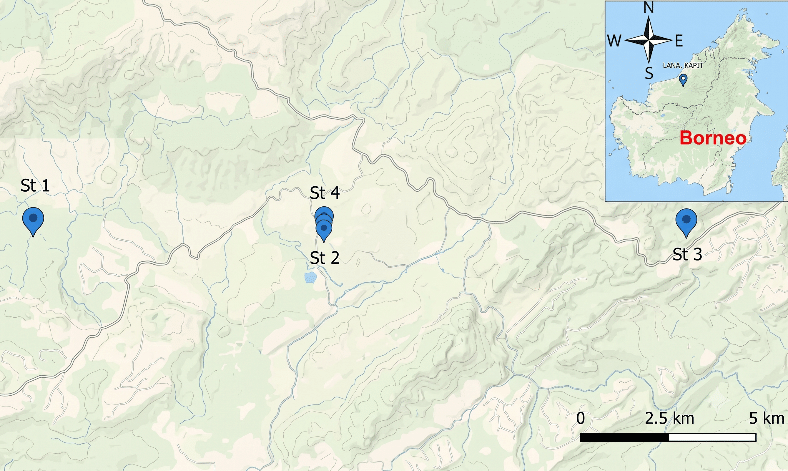
Figure 1. Map of sampling stations (St 1 – St 4) across the Glenealy Lana Estate in Kapit Division, Sarawak, Malaysia.
2.3 Field sampling protocol and laboratory analysis
Fish specimens were captured using experimental monofilament gill nets measuring 50 meters long by 2 meters high, with a standardized mesh size of 2.0 inches. At each station, the gill nets were securely anchored with wooden stakes deployed perpendicularly across the river channel and left submerged for three hours (Figure 2).
Following net retrieval, all trapped fish were carefully collected, recorded, measured, and photographed for morphological verification. Taxonomic identification to the lowest possible taxon was performed via rigorous morphological examination of key diagnostic features, with reference to established Bornean taxonomic keys and systematic literature (Froese and Pauly, 2025; Sholihah et al., 2020). Abundance counts per family and species were tabulated manually. Subsequently, the official extinction risk and global conservation status of each identified species were assigned based on the International Union for Conservation of Nature (IUCN) Red List of Threatened Species assessment criteria (IUCN, 2025).
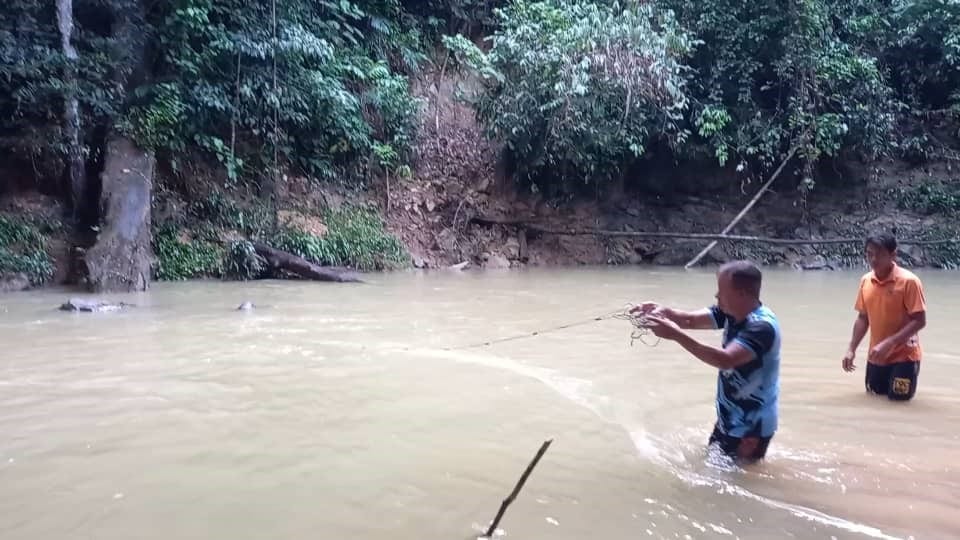
Figure 2. Standardized gill net setup anchored across the plantation stream channel.
2.4 Data analysis
To evaluate and compare the fish community structures across the plantation landscape, presence or absence data were compiled for all four sampling stations. Localized species richness was calculated as the cumulative number of unique species documented at each individual station. To assess taxonomic dominance, the relative species richness contribution (%) of each represented fish family was calculated against the total number of recorded species. Species were also categorized based on their official global conservation status using the IUCN Red List of Threatened Species criteria.
3. Results
3.1 Fish species composition and spatial distribution
The inventory yielded a total of 19 freshwater fish species distributed across four taxonomic families and four stream locations in Glenealy Lana Estate (Table 1). Among all documented taxa, Barbonymus collingwoodii (local name: Kepiat) emerged as the single most abundant species, occurring consistently across every sampled station (St 1 to St 4). Conversely, four taxa were restricted to single locations: Rasbora argyrotaenia and Puntius sp. occurred only at Station 2, whereas Gastromyzon ctenocephalus and Rasbora laticlavia were found exclusively at Station 3. The remaining species in this study were found at two or three stations.
Table 1. Freshwater fish species recorded across four sampling stations in Glenealy Lana Estate, Kapit, Sarawak, with corresponding IUCN conservation status.
| Family | Scientific name | Common name | IUCN status | St 1 | St 2 | St 3 | St 4 |
| Bagridae | Hemibagrus fortis | Baung | LC | + | – | – | + |
| Cobitidae | Acantopsis octoactinotos | Horseface loach | VU | + | + | – | – |
| Cyprinidae
|
Barbonymus collingwoodii | Kepiat | LC | + | + | + | + |
| Crossocheilus obscurus | Kulong | DD | – | + | + | – | |
| Cyclocheilichthys apogon | Boeng | LC | + | + | + | – | |
| Hampala macrolepidota | Adong / Seberau | LC | + | + | – | + | |
| Labiobarbus leptocheilus | Umbu | LC | – | + | + | – | |
| Lobocheilos kajanensis | Kulong | LC | + | + | + | – | |
| Osteochilus kahajanensis | Palau | LC | + | + | – | – | |
| Osteochilus vittatus | Bantak | LC | – | + | + | – | |
| Puntius sp. | Bangah | NE | – | + | – | – | |
| Tor douronensis | Semah | NE | + | + | – | + | |
| Danionidae
|
Luciosoma setigerum | Panjut / Lansi | LC | + | + | + | – |
| Luciosoma trinema | Nyenyuar | LC | – | + | + | – | |
| Rasbora argyrotaenia | Seluang | LC | – | + | – | – | |
| Rasbora dusonensis | Seluang ekor kuning | LC | + | + | + | – | |
| Rasbora laticlavia | Seluang | LC | – | – | + | – | |
| Rasbora tornieri | Seluang ekor merah | LC | + | + | + | – | |
| Gastromyzonidae | Gastromyzon ctenocephalus | Borneo sucker | NT | – | – | + | – |
Least concern=LC; not evaluated=NE; vulnerable=VU; data deficient=DD; near threatened=NT
3.2 Conservation status and environmental threats
Evaluating the recorded species against the IUCN Red List of Threatened Species revealed varied conservation statuses across the plantation assemblage. Notably, Acantopsis octoactinotos was classified as Vulnerable (VU), denoting a substantial risk of extinction in the wild if habitat degradation continues unabated. Gastromyzon ctenocephalus was categorized as Near Threatened (NT), indicating that the species may soon qualify for a threatened status unless habitat stressors are mitigated. Meanwhile, Tor douronensis has not yet been formally evaluated (NE) under current Red List criteria, andCrossocheilus obscurus was categorized as Data Deficient (DD), highlighting the paucity of baseline demographic information available to accurately gauge its extinction risk. The remaining 15 documented species were designated as Least Concern (LC), reflecting stable regional populations currently devoid of immediate extinction threats.
Species richness in the present study varied markedly across the four sampled stream locations (Table 1). Station 2 (Sg. Tingga) recorded the highest overall species richness, harboring 16 of the 19 total species. In contrast, Station 4 (Sg. Bah) exhibited the lowest species count (4 species). Stations 1 (Sg. Sematai) and 3 (Sg. Lalit) supported intermediate diversity levels, with 10 and 9 species, respectively.
3.3 Taxonomic composition and bioindicator significance
Taxonomic compilation revealed that the fish in Lana Estate comprises four major families displaying unequal relative abundance and representation. The family Cyprinidae was overwhelmingly dominant, encompassing 55% of the total recorded species richness (Figure 3). Danionidae constituted the second most diverse family, representing 30% of the total species. The remaining families, Cobitidae, Gastromyzonidae, and Bagridae, were minor contributors, each accounting for 5% of the overall family composition.
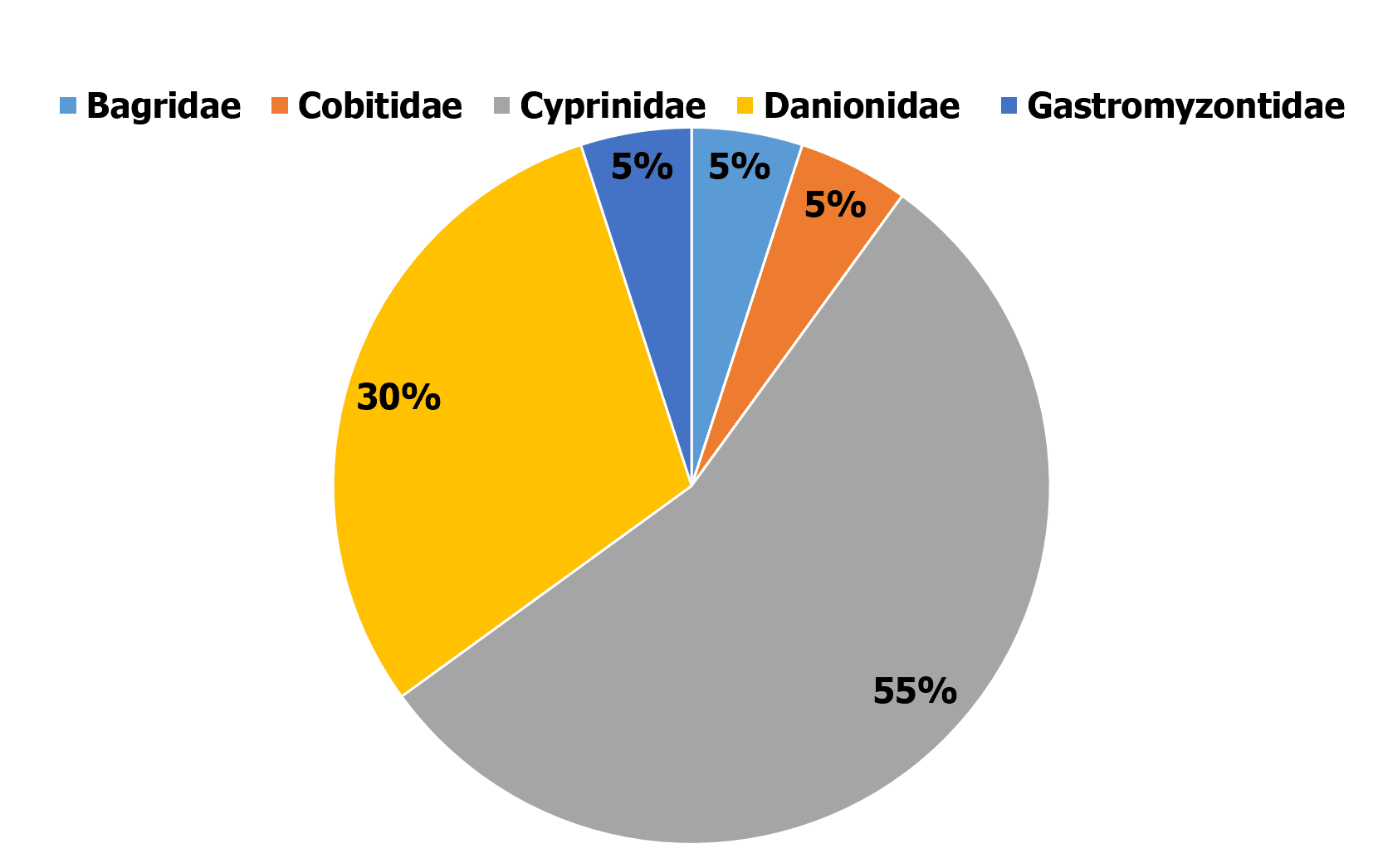
Figure 3. Relative species richness contribution (%) by freshwater fish family in Glenealy Lana Estate.
4. Discussion
The spatial distribution of fish assemblages within the Glenealy Lana Estate stream network revealed contrasting patterns of habitat utilization, reflecting key differences in species-specific ecological traits. The consistent occurrence of Barbodes collingwoodii underscores its broad ecological tolerance, generalist feeding habits, and high physiological adaptability to modified environmental conditions (Adha et al., 2021). In contrast, a subset of species exhibited highly restricted, localized occurrences, being captured at only a single sampling station. These station-specific taxa included Rasbora argyrotaenia, Gastromyzon ctenocephalus, Rasbora laticlavia, and Puntius sp. Such localized distributions highlight specific microhabitat requirements, sensitive benthic preferences, and naturally low population densities within the estate catchments (Harianja et al., 2023; Santiago and Beasley, 2023). The presence of specialized and sensitive species, which are frequently linked to high-quality stream micro-refugia, emphasizes the necessity of targeted habitat monitoring and long-term conservation oversight (Colvin et al., 2019).
The primary anthropogenic pressures affecting vulnerable and near-threatened tropical freshwater fish comprise habitat disruption, water quality degradation, localized over-harvesting, and climate-induced hydrological shifts (Arthington et al., 2016). Watershed transformations, such as forest clearance, land conversion for agriculture, and stream channel alteration, systematically fragment and degrade aquatic habitats. Concurrently, non-point source agricultural runoff and potential palm oil mill effluent (POME) discharge further deteriorate water chemistry and dissolved oxygen levels (Abu Hena et al., 2022; Razali et al., 2018). In addition, rising water temperatures and altered rainfall regimes driven by climate change threaten to disrupt fish reproductive seasonality, alter egg and larval survival, and diminish thermal niche suitability in tropical lowlands (Mitra et al., 2023). High richness at Station 2 suggests superior physical habitat heterogeneity, favorable water quality, and well-preserved riparian cover at this station. In contrast, the lowest species count implies localized environmental stress and reduced channel complexity.
The high number and variety of cyprinid species found in Lana Estate matches a well-known pattern across Southeast Asia, where this fish family is the most diverse and adaptable in freshwater habitats (van der Sleen and Albert, 2022). Members of the genus Barbonymus, in particular, grow quickly in low-lying rivers and agricultural drainage ditches, making them great natural signs of a healthy, stable environment (Chow et al., 2016). Documenting these 19 species within the Glenealy Lana Estate provides a foundation for regional fish monitoring, filling a critical geographical gap in Sarawak’s biodiversity records. Remarkably, despite surrounding land-use changes, no alien, exotic, or invasive fish species such as Oreochromis niloticus or Clarias gariepinus were recorded during the survey. The absolute dominance of native Bornean fauna indicates an aquatic ecosystem that, while impacted by surrounding agricultural operations, retains essential biological integrity—a condition becoming increasingly rare across modified watersheds in Sarawak (Wilkinson et al., 2018). This study provides real proof that freshwater fish in the tropics can survive in plantation areas. Conducting systematic multi-habitat inventories is essential for detecting biodiversity refugia, tracking ecological health trends over time, and establishing a rigorous scientific framework to inform sustainable agricultural policy, certification standards, and regional watershed management.
5. Conclusions
This baseline ecological survey successfully documented 19 freshwater fish species from four families within stream networks traversing the Glenealy Lana Oil Palm Estate in Kapit, Sarawak. Cyprinidae was the most species-rich family, accounting for 55% of the total, with Barbonymus collingwoodii exhibiting abundant distribution across all sampling sites, confirming its ecological adaptability. The localized presence of specialized taxa, such as Gastromyzon ctenocephalus and Rasbora argyrotaenia, indicates reliance on specific microhabitats. Although most recorded species are categorized as Least Concern, the presence of Vulnerable (Acantopsis octoactinotos) and Near Threatened (Gastromyzon ctenocephalus) taxa underscores the conservation importance of these plantation streams. Variations in species richness across stations, with the highest at Station 2 and lowest at Station 4, highlight the influence of localized stream conditions and riparian quality. Importantly, the complete absence of exotic invasive species points to a resilient native community. These findings provide a crucial baseline for long-term biodiversity monitoring, sustainable land-use planning, and the conservation of Bornean freshwater fauna in modified landscapes.
