


Livestock production is a crucial component of the global agricultural economy, providing income and sustenance for millions of rural households (Banda and Tanganyika, 2021). However, sustainable livestock productivity relies heavily on the availability and quality of feed (Jaisli and Brunori, 2024). Livestock farmers face several key challenges, including feed shortages, rising feed costs, and the environmental impacts of conventional fodder production (Ahamed et al., 2023). The demand for high-quality feed has intensified due to population growth, changing dietary preferences, and the need for efficient livestock farming practices (Wanapat et al., 2015).
Traditional fodder cultivation methods require extensive land, water, and inputs such as fertilizers and pesticides, making them resource-intensive and vulnerable to climate variability (Yeleliere et al., 2023). The reduction in available grazing lands, fluctuating rainfall patterns, and rising costs of conventional feed have created an urgent need for alternative and sustainable feeding solutions. Additionally, poor-quality feed adversely affects livestock productivity, leading to lower milk yields, slower weight gain, and overall economic losses for farmers (Godde et al., 2021).
In response to these challenges, hydroponic fodder production has emerged as a viable alternative to traditional cultivation methods. This technique involves growing nutrient-rich feed in a controlled environment without soil, using minimal water and space (Rajendran et al., 2024; Ahamed et al., 2023). Hydroponic systems facilitate year-round fodder production, providing a consistent and sustainable supply of fresh feed for livestock. Furthermore, hydroponic fodder is abundant in essential nutrients, including proteins, vitamins, and minerals, and has been shown to improve livestock health and productivity (Ahamed et al., 2023).
This review aims to provide an in-depth analysis of the nutritional benefits of hydroponic fodder production and its impact on livestock performance. The study examines the chemical composition, digestibility, and economic feasibility of hydroponic feed compared to traditional feeding methods. Additionally, the paper explores the broader implications of hydroponic technology in promoting environmental sustainability, reducing dependence on arable land, and supporting small- to medium-scale livestock farmers.
The review article examines the composition and digestibility of hydroponic fodder, its effects on various types of livestock, and the economic and environmental benefits of its production. Additionally, the paper addresses existing challenges and future prospects for increasing the adoption of hydroponic fodder in the livestock industry. Through this comprehensive review, we aim to provide valuable insights into the role of hydroponic fodder in modern sustainable agriculture.
2. What is hydroponic technology?
Hydroponic technology is a method of growing plants without soil by delivering essential nutrients through a water-based solution. This technique allows for the efficient production of crops, especially fodder, by maintaining optimal moisture and nutrient availability in a controlled environment. Hydroponics is widely used in agriculture to enhance productivity, conserve resources, and enable year-round cultivation, even in areas with poor soil quality or limited water supply.
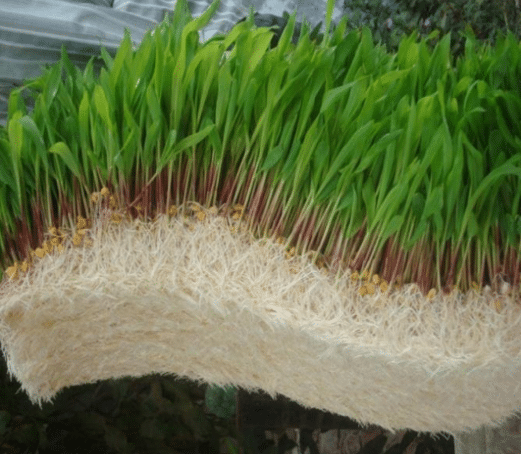
In the context of fodder production, hydroponics is employed to cultivate cereal grains such as maize, bajra, wheat, barley, millets, and horse gram. These grains sprout and develop into green forage within a short period, typically 7 to 10 days, offering nutritious and easily digestible feed for livestock. This method significantly reduces land requirements and minimizes dependency on weather conditions, making it an ideal solution for sustainable fodder production.
3. History of hydroponic fodder cultivation
The concept of hydroponic fodder production dates back to the mid-1800s when French chemist Jean Boussingault verified the nutritional requirements of plants grown without soil. By 1860, Sachs and Knop, working independently in England, refined techniques for "nutriculture." During this period, European farmers sprouted cereal grasses to feed their livestock in winter.
Between 1920 and 1930, Gericke developed large-scale methods for growing plants in nutrient solutions. In 1939, Leitch reviewed various experiments on sprouted fodder for livestock and poultry, recognizing it as a commercial application of water culture for fodder production. In 1969, English scientist Woodward experimented with growing plants in different water sources.
The 1970s saw the design and manufacture of hydroponic fodder production units in Europe and the USA. However, in 1973, South African researcher Harris questioned the economic viability of hydroponics. By the late 1980s, India began exploring hydroponic technology for forage production,
In 2011, hydroponic technology was introduced in Goa under the Rashtriya Krishi Vikas Yojana (RKVY) by the Government of India. Several hydroponic fodder production units were established by Goa Dairy at various dairy cooperative societies, including one at the ICAR Research Complex for Goa, where further research was conducted (Naik et al., 2015).
4. Chemical composition and nutritional value
Hydroponic fodder is recognized for its superior nutrient profile compared to conventionally grown fodder. According to Ramteke et al. (2019) and Shit (2019), the nutrient composition of hydroponically grown maize fodder, on a dry matter basis, reveals a high protein content of 29.87%, supported by a nitrogen level of 4.6%. The fodder also contains essential macronutrients, including potassium (2.22%), phosphorus (0.91%), magnesium (0.246%), calcium (0.167%), and sodium (0.117%). Trace minerals are well-represented, with iron being the highest at 235 mg/kg, followed by zinc (56 mg/kg), manganese (53 mg/kg), and copper (28 mg/kg). Although the original fodder contains 89% moisture, its dry matter profile demonstrates that hydroponic maize fodder is a nutrient-dense feed, particularly rich in protein and essential minerals (Table 1).
Table 1. Nutrient composition of hydroponic fodder (maize) on the basis of dry matter (Ramteke et al., 2019; Shit, 2019).
4.1 Protein content
Hydroponic fodder has a higher crude protein content compared to dry grains. Studies show that hydroponic barley fodder can contain up to 24.9% crude protein, while conventional barley grain contains approximately 14% (Arif et al., 2023a). This increase is attributed to enzymatic activation during the sprouting process, which enhances nitrogen metabolism and protein synthesis. Furthermore, the high availability of amino acids contributes to improved livestock growth and reproduction (Hou et al., 2016).
4.2 Fiber and carbohydrates
While the dry matter content in hydroponic fodder is lower than in traditional feed, its fiber content is still adequate for ruminant digestion. The structural carbohydrates in hydroponic fodder, including neutral detergent fiber (NDF) and acid detergent fiber (ADF), promote better rumen function and enhance nutrient absorption. Additionally, the conversion of starches into simple sugars during sprouting improves energy availability for livestock (Sriagtula et al., 2021; Salo, 2019).
4.3 Vitamins and antioxidants
Hydroponic fodder is a rich source of vitamins, particularly A, C, and E. These vitamins serve as antioxidants, enhancing immune function and overall livestock health (Arif et al., 2023b; Suma et al., 2020). Sprouting also increases β-carotene levels, which further supports reproductive performance and milk quality in dairy animals. Additionally, hydroponic fodder is free from synthetic additives and pesticides, making it a healthier option for livestock. It also contains significant amounts of vitamin B-complex, which supports metabolic functions and reduces oxidative stress in animals (Esmael et al., 2024; Mitsuishi and Yayota, 2024).
4.4 Minerals
The mineral composition of hydroponic fodder is influenced by the quality of water and nutrients provided during growth. Key minerals, including calcium, phosphorus, potassium, and magnesium, are present in higher concentrations compared to traditional feeds, which promotes bone health and metabolic efficiency in livestock. Additionally, trace elements such as zinc, copper, and selenium enhance immune function and fertility. Maintaining a proper mineral balance in livestock diets contributes to increased milk production, stronger bones, and improved reproductive health (Szekely and Jijakli, 2022).
5. Digestibility and livestock performance
Hydroponic fodder enhances nutrient digestibility due to its soft texture and high moisture content. Studies have shown that feeding dairy cattle hydroponic fodder can increase milk yield by 8–13%, while beef cattle exhibit improved weight gain and carcass quality. This improved digestibility results from the enzymatic breakdown of starches into simpler sugars, making the feed more palatable and easier to metabolize (AH et al., 2020).
In poultry, hydroponic fodder supplementation is associated with improved egg production and shell quality. In sheep and goats, studies indicate higher feed conversion efficiency and enhanced reproductive performance. Additionally, hydroponic fodder helps reduce gastrointestinal disorders due to its high water content and enzyme-rich composition (Baye et al., 2024; Arif et al., 2023a).
5.1 Effect on cattle
Hydroponic fodder has been reported to improve milk yield and composition in dairy cows (Table 2). Studies indicate that cows fed hydroponic barley fodder produce higher milk fat content due to enhanced fiber digestibility. Additionally, hydroponic maize fodder has been linked to increased overall milk production, which boosts farm profitability (Masucci et al., 2024; Wu et al., 2024).
Hydroponic fodder enhances nutrient digestibility because of its soft texture and high moisture content. Research shows that feeding dairy cattle hydroponic fodder can increase milk yield by 8–13%, while beef cattle experience improved weight gain and carcass quality (Arif et al., 2023b). This improved digestibility results from the enzymatic breakdown of starches into simpler sugars, making the feed more palatable and easier to metabolize.
Inclusion of hydroponic fodder in beef cattle diets positively affects growth rates, muscle development, and carcass quality. The increased digestibility and high protein content contribute to improved feed efficiency, leading to faster weight gain and leaner meat production (Baye et al., 2024).
Table 2. Summary of key studies on hydroponic fodder supplementation and its effects on cattle.
5.2 Effect on small ruminants (sheep and goats)
Sheep and goats significantly benefit from hydroponic fodder, with studies demonstrating improvements in reproductive performance, growth rates, and wool quality. The high moisture content of hydroponic fodder enhances hydration and nutrient absorption in these animals (Rajak et al., 2024).
In goats, feeding barley hydroponic fodder at 2.5 to 5 kg per day has been shown to enhance growth performance and digestible nutrient intake, particularly in Gir calves (Jediya et al., 2021). Similarly, hydroponic maize fodder has been identified as an effective calf starter, improving dry matter consumption and body weight, thereby increasing economic efficiency (Rani et al., 2019). Replacing 50–75% of the dry matter (DM) in the feed with hydroponic maize fodder resulted in improved weight gain, higher dry matter intake, and reduced production costs (Rajkumar et al., 2018). A combination of 20–40% hydroponic maize and barley fodder also led to enhanced nutrient digestibility and better productive performance in livestock (Ebenezer et al., 2021; Gebremedhin, 2015). Additionally, supplementing with 25–50% hydroponic maize fodder increased conception rates and twin births, highlighting its positive impact on reproductive efficiency (Jemimah et al., 2022) (Table 3).
For sheep, hydroponic barley fodder at 15–25% inclusion has been shown to enhance reproductive traits, increase dry matter intake, and improve nutrient digestibility (Al-Baadani et al., 2022; Raeisi et al., 2018). However, in some cases, hydroponic barley fodder alone was reported to negatively affect lamb growth (Chethan et al., 2022). In contrast, combining hydroponic corn with conventional forage significantly increased daily weight gain (Mekonnen et al., 2019). Furthermore, feeding sheep 948 g of oat fodder per lamb per day improved growth performance and carcass quality (Devendar et al., 2020).
Table 3. Summary of key studies on hydroponic fodder supplementation and its effects on goat and sheep.
5.3 Effect on poultry
Hydroponic fodder has been integrated into poultry diets to enhance egg quality, yolk color, and overall growth performance. The essential vitamins and antioxidants present in hydroponic feed contribute to improved immunity and reduced mortality rates in poultry farming (Abouelezz et al., 2019).
In poultry, the supplementation of hydroponic fodder has been linked to increased egg production and improved shell quality. In sheep and goats, studies show that it leads to higher feed conversion efficiency and enhanced reproductive performance. Additionally, hydroponic fodder helps reduce gastrointestinal disorders due to its high water content and enzyme-rich composition (Al-Kanaan, 2022).
6. Economic and environmental benefits
Hydroponic fodder production offers significant economic and environmental advantages compared to conventional fodder cultivation methods. By using minimal resources and providing sustainable solutions for livestock feed, hydroponic systems contribute to cost savings and ecological conservation.
6.1 Economic benefits
Hydroponic fodder systems provide significant economic advantages for livestock farmers. One major benefit is water efficiency; these systems use only 1.5 to 3 liters of water per kilogram of fresh fodder, a fraction of what traditional cultivation requires. This results in lower water bills, especially in arid and semi-arid areas where water is scarce and costly (Ahamed et al., 2023). Additionally, hydroponic setups require minimal space and can be installed in greenhouses, on rooftops, or in vertical farms. Remarkably, a 9m x 6m unit can produce as much fodder as 1,200 acres of pastureland, greatly optimizing land use (Rajendran et al., 2024).
Another key advantage is cost savings; feeding livestock with hydroponic fodder can reduce feed expenses by 30–50% due to its high digestibility and nutritional value (Arif et al., 2023a). Increased productivity—such as higher milk yield, faster weight gain, and better reproductive health—further boosts profitability (Agius et al., 2019; AH et al., 2020). Importantly, hydroponic systems provide a consistent year-round supply of fresh, high-quality fodder, shielding farmers from seasonal fluctuations and price volatility (Naik et al., 2014; Soder et al., 2018). This reliability enhances livestock management and supports long-term economic stability (Upreti et al., 2020).
6.2 Environmental benefits
Beyond its economic appeal, hydroponic fodder production offers several environmental benefits. It drastically reduces water consumption—by up to 90%—compared to conventional methods, thanks to closed-loop systems that recycle water and minimize waste (Suma et al., 2020). The absence of soil in hydroponic systems eliminates issues related to soil degradation, erosion, and overgrazing, thereby preserving arable land and protecting biodiversity (Rajendran et al., 2024; Szekely and Jijakli, 2022).
Additionally, this technology reduces greenhouse gas emissions by eliminating the need for plowing, synthetic fertilizers, and pesticides (Ahamed et al., 2023). Since hydroponic fodder is grown without chemical inputs, it lowers the risk of soil and water contamination and ensures healthier feed for livestock, which translates into safer dairy and meat products for consumers (Gebremedhin, 2015; Al-Kanaan, 2022). Finally, these systems provide a climate-resilient alternative to traditional farming, capable of withstanding the increasing frequency of droughts, floods, and erratic weather patterns (Godde et al., 2021; Yeleliere et al., 2023). Collectively, these advantages position hydroponic fodder as a promising tool for sustainable agriculture and environmental stewardship.
7. Conclusions
Hydroponic fodder production offers a sustainable and efficient solution to key challenges in modern livestock farming, such as land scarcity, climate variability, and rising feed costs. Grown without soil in controlled environments, hydroponic fodder is rich in protein, vitamins, and minerals, improving livestock performance in terms of milk yield, weight gain, and feed conversion. Environmentally, it requires less water and land and eliminates chemical inputs, reducing the ecological footprint of farming. Economically, it can lower feed costs by up to 50%, benefiting especially small and medium-scale farmers. However, barriers like high initial costs, technical requirements, and scalability remain. With targeted research, training, and policy support, hydroponics can become a key strategy for climate-resilient, resource-efficient livestock production and improved food security.
Acknowledgements
The authors wish to express their deepest gratitude to the researchers and authors whose work has significantly contributed to this study.
Funding information
The authors did not get any external funding.
Data availability
Not applicable.
Informed consent statement
Not applicable.
Conflict of interest
The authors declare no conflict of interest.
Authors’ contribution
Conceptualization, review design, first drafting, and manuscript revision: Kazi Abdus Sobur; conceptualization, first drafting, manuscript revision: Partha Pratim Ghosh; analysis and synthesis of the collected literature, and manuscript revision: Md. Emdadul Haq; literature search, data curation, first drafting, manuscript revision: Rayhan Ahmmed Pranto; analysis and synthesis of the collected literature, first drafting, manuscript revision: Anika Thasin Bithi; analysis and synthesis of the collected literature, and manuscript revision: Md. Mosharraf Hossen; analysis and synthesis of the collected literature, first drafting, and manuscript revision: A. A. Jabir; analysis and synthesis of the collected literature, and manuscript revision: Limon Biswas; literature search, data curation, first drafting, manuscript revision: Sajjad Hussain Munim; Conceptualization, review design, first drafting, and manuscript revision: Md. Zaminur Rahman. All authors critically reviewed the manuscript and agreed to submit final version of the manuscript.
