


Brinjal (Solanum melongena L.) is an important vegetable crop widely cultivated in tropical and subtropical regions due to its adaptability, nutritional value, and economic significance (Shil et al., 2024; Islam et al., 2023). Despite its importance, brinjal production is severely constrained by numerous insect pests that attack the crop throughout its growth stages. Among these, the shoot and fruit borer (Leucinodes orbonalis) is considered the most destructive pest (Chadar et al., 2024). These pests directly damage shoots and fruits, leading to significant yield losses and reduced market value (Siam et al., 2024). Traditionally, managing this pest has relied on frequent applications of chemical insecticides. In many production systems, farmers apply pesticides at very short intervals, sometimes exceeding recommended doses, in an attempt to control infestations (Gramazio et al., 2023; Gautam et al., 2019). Such practices have led to several adverse consequences, including the development of pesticide resistance, environmental pollution, and the accumulation of harmful residues in food products (Shivalingaswamy et al., 2022). These concerns have prompted increasing interest in alternative, environmentally safe, and sustainable pest management strategies.
Physical exclusion using insect-proof netting is gaining recognition as an effective non-chemical method of pest control (Thomas et al., 2025). Exclusion nets act as a mechanical barrier that prevents insect pests from accessing host plants, thereby reducing infestation levels without the need for chemical inputs (Sundaresan, 2025). In addition to their barrier effect, nets can modify microclimatic conditions such as temperature, humidity, and light intensity, which may influence insect behavior, reproduction, and survival (Thakur et al., 2021). Previous studies have demonstrated that netting systems can significantly reduce pest populations and improve crop protection in various horticultural crops (Venkatesh et al., 2025; Nasif et al., 2020). The population dynamics of L. orbonalis are closely associated with environmental factors. Studies have shown that temperature, humidity, and seasonal variation play important roles in determining pest incidence and severity (Chadar et al., 2024; Dash et al., 2020). Therefore, modifying the crop microenvironment through physical barriers such as nets may provide an effective means of disrupting pest development. In addition to environmental factors, varietal characteristics also influence pest susceptibility. Differences in morphological and physiological traits among brinjal varieties can affect pest preference and infestation levels (Tripathy et al., 2025; Bhuvaneswari et al., 2023). Thus, integrating varietal selection with physical exclusion methods could enhance the effectiveness of pest management strategies. Recent studies have also emphasized the importance of integrating physical barriers into IPM systems. For example, insect-proof netting has been reported to significantly reduce pest infestation in vegetable crops while minimizing pesticide use (Balikai et al., 2020). Similarly, protected cultivation using insect exclusion netting has been reported to reduce pest infestation by acting as a physical barrier while also modifying the crop environment, thereby influencing pest activity and crop protection (Chouinard et al., 2016; Alaphilippe et al., 2016).
Although pest exclusion nets have previously been evaluated in vegetable crops, comparative information regarding the effectiveness of different colored pest exclusion nets in combination with brinjal varieties under open field conditions in Bangladesh remains limited. Therefore, this study evaluated the impact of different colored pest exclusion nets on pest incidence in four brinjal varieties. The findings provide useful information for selecting suitable net–variety combinations to support environmentally sustainable pest management while reducing reliance on chemical pesticides.
2. Materials and Methods
2.1 Ethical approval statement
No ethical approval was required to conduct the study.
2.2 Experimental site and periods
The experiment was carried out at the Horticulture Farm of BAU, Mymensingh, from October 2021 to April 30, 2022, located within the Old Brahmaputra Floodplain agro-ecological zone (Figure 1). The experimental field is situated at approximately 24.75° N latitude and 90.50° E longitude, with an elevation of about 19 m above sea level. The soil was sandy loam in texture with moderate fertility and a slightly acidic pH. The site experiences subtropical climatic conditions, which are suitable for brinjal cultivation and for the development of insect pests.
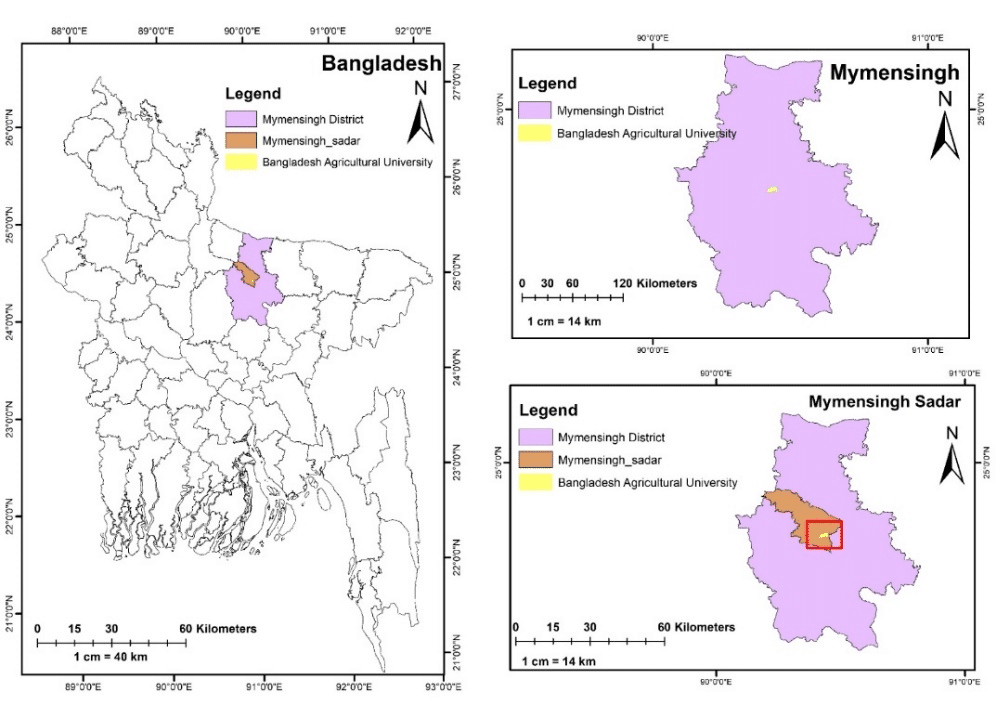
Figure 1. Map of the study area generated using ArcGIS version 10.6.1.
2.3 Experimental design and treatments
The study employed a two-factor experiment arranged in a randomized complete block design (RCBD) with three replications. The first factor comprised four pest exclusion net treatments: no net (open field), white net, blue net, and green net. The second factor included four brinjal varieties: Singhnath, Local, Sheuly, and BARI Hybrid Begun-3. The Local variety, a farmer-maintained landrace collected from the Mymensingh local seed market, was characterized by long, light-purple fruits and medium plant vigor. It was included for comparison with released brinjal varieties. Each treatment combination was randomly assigned within each block to minimize experimental error.
All possible combinations of the two factors resulted in 16 treatment combinations (4 net treatments × 4 varieties). Each experimental plot measured 4.0 m × 4.0 m (16 m²) and contained 16 plants spaced at 1.0 m × 1.0 m. Data were collected from the central five plants to minimize border effects. Yield per hectare was calculated from plot yield using the harvested plot area.
2.4 Crop establishment and management
Seeds of selected brinjal varieties were sown in prepared seedbeds, and healthy seedlings were transplanted into the field once they reached suitable growth. The land was prepared through repeated plowing and leveling to ensure proper tilth. Organic manures, including cow dung and mustard oil cake, were incorporated into the soil during land preparation. Seedlings were transplanted with uniform spacing to ensure proper plant growth and aeration. Intercultural operations such as weeding, irrigation, and earthing up were carried out as needed throughout the cropping period. Pest exclusion nets with a mesh size of approximately 40 mesh per inch were installed over the experimental plots according to the treatment specifications. No chemical pesticides were applied during the experiment to allow natural pest infestation and to evaluate the effectiveness of the net treatments.
2.5 Microclimatic monitoring
Atmospheric temperature (°C), relative humidity (%), and light intensity (lux) were monitored under each treatment (open field, white net, blue net, and green net) throughout the experimental period. Measurements were recorded at 09:00, 12:00, and 16:00 h using a portable digital thermo-hygrometer and a digital lux meter. The mean values are presented in Table 1 to characterize the microclimatic conditions prevailing under the different pest exclusion net treatments during the experiment.
Table 1. Mean microclimatic conditions recorded under different pest exclusion net treatments during the experimental period.
| Treatment | Temperature (°C)
(09:00 / 12:00 / 16:00 h) |
Relative humidity (%)
(09:00 / 12:00 / 16:00 h) |
Light intensity (lux) (09:00 / 12:00 / 16:00 h) |
| Open field (no net) | 20.59 / 23.38 / 22.27 | 78.25 / 67.25 / 60.00 | 295.00 / 340.20 / 98.50 |
| White net | 23.07 / 26.17 / 23.92 | 75.50 / 65.20 / 62.25 | 222.00 / 249.12 / 97.75 |
| Blue net | 25.56 / 26.77 / 25.64 | 75.45 / 65.75 / 61.83 | 189.45 / 242.32 / 98.07 |
| Green net | 24.48 / 25.39 / 25.82 | 76.20 / 64.58 / 59.46 | 203.42 / 248.67 / 96.67 |
Values represent the recorded mean observations during the experimental period.
2.6 Data collection on pest incidence
Pest incidence was recorded from randomly selected plants within each plot. The number of infested plants was counted to determine pest incidence at the plant level, while the number of infested fruits was recorded to calculate the percentage of fruit infestation. Observations were taken at regular intervals during crop growth and at harvesting stages to capture the overall infestation pattern. The shoot and fruit borer (L. orbonalis) was identified based on the characteristic symptoms of shoot and fruit damage, together with the morphological characteristics of larvae and adults, using standard published identification guides.
2.7 Statistical analysis
Data were analyzed using MSTAT-C statistical software. A two-factor analysis of variance (ANOVA) in a randomized complete block design (RCBD) was performed to evaluate the effects of net color, variety, and their interaction on pest incidence in plants and fruits. Treatment means were compared using the Least Significant Difference (LSD) test at 5% and 1% significance levels. The coefficient of variation (CV%) was calculated and is presented in the respective tables to assess experimental precision. Statistical significance was considered at P < 0.05 and P < 0.01.
3. Results
3.1 Effect of colored pest exclusion nets on pest incidence in plants
Pest incidence in plants was significantly influenced by different colored pest exclusion nets and brinjal varieties. Analysis of variance revealed that the effect of net color, variety, and their interaction was highly significant (P < 0.01) for pest incidence. The highest infestation (35.83%) was recorded under open field conditions (no net), which was significantly higher than all net-covered treatments. In contrast, the lowest pest incidence (2.33%) was observed under white nets (T2), which was statistically similar to blue nets (2.56%) but significantly lower than green nets (4.17%). The reduction in pest incidence under net treatments indicates the effectiveness of pest exclusion nets in minimizing insect infestation. Compared to the control, white nets reduced pest incidence by more than 90%, demonstrating their superior performance. Varietal differences were also statistically significant (P < 0.01). The local variety (V2) exhibited the highest pest incidence (14.72%), which was significantly higher than all other varieties. In contrast, Singhnath (V1) showed the lowest infestation (7.83%), followed by Sheuly (10.25%) and BARI Hybrid Begun-3 (12.08%) (Table 2).
Table 2. Effect of colored pest exclusion nets and variety on pest incidence in plants (%) of brinjal.
| Factor | Treatment | Pest incidence (%) |
| Net color | No net (T1) | 35.83 a |
| Green net (T4) | 4.17 b | |
| Blue net (T3) | 2.56 c | |
| White net (T2) | 2.33 c | |
| LSD (0.05) | 0.16 | |
| LSD (0.01) | 0.22 | |
| CV (%) | 1.74 | |
| P-value | < 0.01 | |
| Variety | Local (V2) | 14.72 a |
| BARI Hybrid (V4) | 12.08 b | |
| Sheuly (V3) | 10.25 c | |
| Singhnath (V1) | 7.83 d | |
| LSD (0.05) | 0.16 | |
| LSD (0.01) | 0.22 | |
| CV (%) | 1.74 | |
| P-value | < 0.01 |
T = net treatment; V = variety; values are means of three replications. Means followed by the same letter(s) within a column are not significantly different at 5% level according to the LSD test. Treatment effects were significant at P < 0.01 based on ANOVA.
3.2 Effect of colored pest exclusion nets on pest incidence in fruits
Pest incidence in fruits was significantly affected by net color, variety, and their interaction. ANOVA results indicated highly significant differences among treatments (P < 0.01). As shown in Table 3, fruit infestation varied widely across treatments. The highest pest incidence (72.64%) was recorded in the no-net control, which was significantly higher than all net treatments. The lowest infestation (3.64%) was observed under white nets, followed by blue (4.02%) and green (4.46%) nets. The reduction in fruit infestation under net treatments was substantial, with white nets reducing pest incidence by approximately 95% compared to the control. This clearly demonstrates the effectiveness of exclusion nets in protecting fruits from insect damage. Varietal differences were also statistically significant (P < 0.01). The local variety (V2) showed the highest fruit infestation (26.87%), whereas the lowest infestation (14.51%) was recorded in Singhnath (V1). The Sheuly (V3) and BARI Hybrid (V4) varieties showed intermediate levels of infestation.
Table 3. Effect of colored pest exclusion nets and variety on pest incidence in fruits (%) of brinjal.
| Factor | Treatment | Pest incidence (%) |
| Net color | No net (T1) | 72.64 a |
| Green net (T4) | 4.46 b | |
| Blue net (T3) | 4.02 c | |
| White net (T2) | 3.64 d | |
| LSD (0.05) | 0.62 | |
| LSD (0.01) | 0.83 | |
| CV (%) | 3.49 | |
| P-value | < 0.01 | |
| Variety | Local (V2) | 26.87 a |
| BARI Hybrid (V4) | 23.46 b | |
| Sheuly (V3) | 19.91 c | |
| Singhnath (V1) | 14.51 d | |
| LSD (0.05) | 0.62 | |
| LSD (0.01) | 0.83 | |
| CV (%) | 3.49 | |
| P-value | < 0.01 |
T = net treatment; V = variety. Values are means of three replications. Means followed by the same letter(s) within a column are not significantly different at 5% level according to the LSD test. Treatment effects were significant at P < 0.01 based on ANOVA.
3.3 Combined effect of net color and variety on pest incidence
The interaction between net color and variety had a highly significant effect (P < 0.01) on pest incidence in both plants and fruits, indicating that varietal responses differed under various net conditions. Table 4 showed that the highest pest incidence in plants (42.34%) and fruits (91.75%) was observed in the combination of no net with the local variety (T1V2). This treatment combination differed significantly from all other treatments, indicating severe susceptibility under open field conditions. Conversely, the lowest pest incidence in plants (0.33%) and fruits (2.01%) was recorded in the combination of white net with the Singhnath variety (T2V1). This combination was statistically similar to other net treatments involving Singhnath but significantly lower than all no-net combinations. Other combinations under net treatments also showed reduced infestation compared to the control, suggesting that pest exclusion nets are effective regardless of variety, although the degree of effectiveness varies.
Table 4. Combined effect of colored pest exclusion nets and variety on pest incidence (%) in brinjal.
| Treatment combination | Pest incidence in plant (%) | Pest incidence in fruit (%) |
| T1V2 | 42.34 | 91.75 |
| T1V1 | 29.99 | 51.14 |
| T1V3 | 33.67 | 68.33 |
| T1V4 | 37.33 | 79.33 |
| T2V1 | 0.33 | 2.01 |
| T2V2 | 4.33 | 4.95 |
| T2V3 | 1.99 | 3.59 |
| T2V4 | 2.66 | 4.01 |
| T3V1 | 0.33 | 2.44 |
| T3V2 | 4.89 | 5.12 |
| T3V3 | 2.01 | 3.61 |
| T3V4 | 2.99 | 4.89 |
| T4V1 | 0.67 | 2.44 |
| T4V2 | 7.33 | 5.66 |
| T4V3 | 3.33 | 4.11 |
| T4V4 | 5.33 | 5.61 |
| LSD (0.05) | 0.33 | 1.23 |
| LSD (0.01) | 0.44 | 1.66 |
| CV (%) | 1.74 | 3.49 |
| P-value | < 0.01 | < 0.01 |
T = net treatment; V = variety. Values are means of three replications. Treatment effects were significant at P < 0.01 based on ANOVA.
3.4 Comparative pest incidence in plants and fruits under different net treatments
Figure 2 illustrates the variation in pest incidence in plants and fruits under different net treatments. Pest incidence was highest in the no-net treatment, reaching 35.83% in plants and 72.64% in fruits. In contrast, all colored pest exclusion nets markedly reduced pest infestation. The white net recorded the lowest pest incidence, with 2.33% in plants and 3.64% in fruits, followed by the blue net (2.56% and 4.02%, respectively) and the green net (4.17% and 4.46%, respectively). Overall, the exclusion nets substantially reduced pest incidence compared with the open-field (no-net) treatment, demonstrating their effectiveness in minimizing pest infestation.
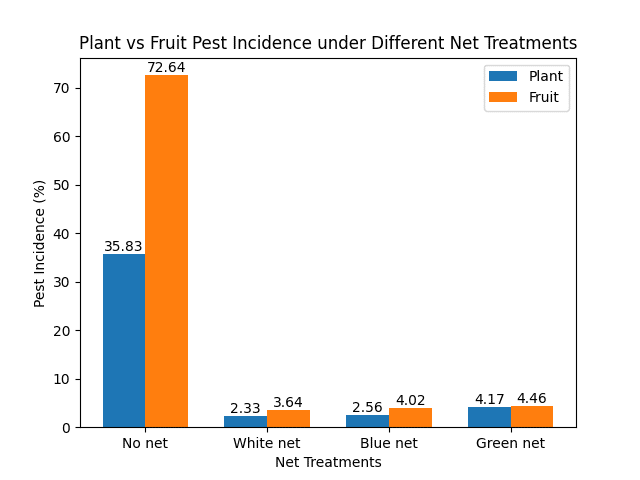
Figure 2. Comparative pest incidence in plants and fruits (%) under different colored pest exclusion net treatments.
4. Discussion
The present study clearly demonstrated that colored pest exclusion nets significantly reduced pest incidence in brinjal at both plant and fruit levels. The highest infestation recorded under open-field conditions confirms that brinjal crops are highly vulnerable to insect pests when grown without physical protection. This finding is consistent with previous reports indicating that open-field cultivation exposes brinjal crops to severe infestation by L. orbonalis because plants remain fully accessible to ovipositing adults throughout the growing season (Chadar et al., 2024; Dash et al., 2020).
The substantial reduction in pest incidence under net treatments highlights the effectiveness of exclusion nets as a physical barrier. These nets prevent insect entry and limit their access to host plants, thereby reducing infestation levels. Similar findings were reported by Venkatesh et al. (2025), who observed that exclusion systems effectively prevent insect movement and disrupt pest colonization. In addition to physical exclusion, nets may also interfere with insect mating and reproduction, further reducing pest populations (Sundaresan, 2025). Among the net treatments, the white net was the most effective in reducing pest incidence. This may be attributed to its ability to create a more favorable microenvironment that is less conducive to pest development. Alaphilippe et al. (2016) reported that netting systems can slightly modify temperature and humidity, which may influence insect behavior and activity. Such microclimatic changes could reduce pest feeding and reproduction rates (Thakur et al., 2021). Additionally, the superior performance of the white pest exclusion net observed in this study may be associated with differences in the physical barrier effect and changes in the crop microenvironment. However, spectral transmittance, shading coefficient, and other optical properties of the nets were not measured. Therefore, the underlying mechanisms responsible for the differences among net colors could not be confirmed and should be investigated in future studies.
The lower pest incidence observed in fruits treated with nets is particularly important because fruit damage directly affects marketability and economic returns. Seasonal studies have shown that L. orbonalis infestation begins in tender shoots during the vegetative stage and progressively shifts to fruits as the crop enters the reproductive stage (Chadar et al., 2024; Dash et al., 2020). By preventing pest entry, exclusion nets effectively interrupt this cycle, leading to reduced fruit damage (Chadar et al., 2024).
Varietal differences observed in this study further emphasize the role of genetic factors in pest resistance. The Singhnath variety exhibited lower pest incidence compared to other varieties, suggesting inherent resistance or tolerance traits. Similar findings were reported by Oladosu et al. (2021) and Oguntolu et al. (2022), who observed significant variation among brinjal genotypes in terms of pest susceptibility. Additionally, wide genetic variability among brinjal accessions indicates the potential for selecting pest-resistant varieties (Alam and Salimullah, 2021).
The interaction between net color and variety revealed that the combination of white nets and the Singhnath variety provided the most effective pest control. This indicates that integrating physical and genetic approaches can enhance pest management outcomes. Such integrated strategies are essential for sustainable agriculture, as they reduce reliance on chemical pesticides and minimize environmental impact (Nasif et al., 2020). The high pest incidence observed in the local variety under no-net conditions highlights the vulnerability of susceptible genotypes in open-field cultivation. This supports previous findings that pest infestation is influenced by both environmental conditions and host plant characteristics (Rangaiah et al., 2024; Dash et al., 2020). Overall, the findings of this study demonstrate that colored pest exclusion nets, particularly white nets, offer an effective, eco-friendly alternative to conventional pest control methods. By reducing pest pressure and eliminating the need for chemical pesticides, these nets contribute to safer food production and environmental sustainability.
5. Conclusions
This study demonstrated that colored pest exclusion nets significantly reduce pest incidence in brinjal. The white net was the most effective treatment, leading to the lowest pest incidence in both plants and fruits. The reduced pest infestation under net conditions is likely due to the physical barrier effect and the modification of the microenvironment, which limits pest activity and reproduction. Varietal differences also played a significant role, with the Singhnath variety exhibiting the lowest infestation level, indicating its relative resistance to pests. The interaction between net color and variety further highlighted that combining white nets with the Singhnath variety is most effective for minimizing pest incidence. These findings suggest that pest exclusion nets can be successfully used as an alternative to chemical pesticides, contributing to safer and more sustainable vegetable production systems. Therefore, white pest exclusion nets should be adopted for brinjal cultivation to reduce pest infestation without relying on chemical pesticides. Future studies should include multi-location and multi-season evaluations, detailed spectral characterization of colored pest exclusion nets, monitoring of microclimatic conditions beneath the nets, economic cost-benefit analyses, and the integration of exclusion net technology with other environmentally sustainable pest management strategies.
