


Yogurt, also known as yoghurt, is a popular fermented dairy product recognized by consumers for its health benefits and nutritional value (Weerathilake et al., 2014). This distinctive food is enjoyed globally, free from cultural, religious, or traditional taboos. Cow's milk is the primary ingredient used in yogurt production worldwide. The term "yogurt" derives from the Turkish word "jugurt," which describes any fermented food with an acidic taste (Chandan et al., 2017). Similarly, dahi is a type of curd created through the lactic acid fermentation of milk. In tropical climates, dahi is commonly used to preserve milk for human consumption. The lactic acid produced during fermentation helps prevent spoilage while imparting a pleasantly acidic and aromatic flavor, making it especially refreshing in hot weather. Ancient civilizations recognized that fermentation introduced therapeutic properties not significantly present in fresh milk. Furthermore, while some individuals are allergic to fresh milk, many can tolerate dahi (Pranto et al., 2025).
Yogurt gained widespread popularity during the 1950s and 1960s, coinciding with the rise of the health food movement. Today, fermented foods make up approximately 25% of the global diet and provide protection against foodborne infections (Pal et al., 2015; Adebayo et al., 2014). Bangladeshi yogurt, commonly referred as “dahi”; is a smooth and tangy dairy product that holds an important role in the nation’s cuisine. It is frequently served alongside spicy foods to provide a cooling contrast or enjoyed on its own. Known for its smoothy, consistency and uniquely rich taste, this yogurt is a beloved foremost in Bangladeshi lineages.
In terms of market value, global yogurt sales reached $51 billion in 2011, with Switzerland and Saudi Arabia among the highest per capita consumers, boasting annual consumption rates of 28.8 kg and 22.1 kg per person, respectively, in 2008. Yogurt, often marketed as bio-yogurt, is regarded as a nutrient-dense food due to its rich nutritional profile, particularly its high bioavailable calcium content. Additionally, it offers milk proteins of high biological value, containing nearly all essential amino acids required for good health, and serves as a probiotic carrier, delivering beneficial bacteria into the body. Furthermore, yogurt has been associated with improved lactose tolerance, enhanced immune function, and the prevention of gastrointestinal disorders. As a health-promoting food, yogurt offers numerous benefits, driving consumer demand and making it the fastest-growing segment in the dairy market, particularly in the categories of standard yogurt and yogurt drinks (Weerathilake et al., 2014).
This review explores the growing significance of smart dairy products, particularly yoghurt and dahi, and their health impact on the Bangladeshi population. Yoghurt and dahi, known for their probiotic potential and nutrient-rich composition, have been widely recognized for their roles in managing and preventing various health conditions, including diabetes, cardiovascular diseases, cancer, bone health issues, obesity, and gastrointestinal disorders. This paper aims to examine the scientific evidence surrounding these health impacts while assessing the feasibility of integrating smart dairy products into the traditional Bangladeshi diet to promote overall well-being. By analyzing the nutritional value, bioactive components, and potential risks associated with yoghurt consumption, this review intends to provide valuable insights for healthcare professionals, nutritionists, and policymakers to optimize dietary recommendations and public health strategies.
2. Methodology
2.1 Ethical approval statement
No ethical approval was required for this study.
2.2 Procedure
Milk fermentation is a traditional method for extending the shelf life of milk. Yogurt, a fermented milk product, is valued for its high digestibility, nutrient bioavailability, and associated health benefits, including its suitability for lactose-intolerant individuals and those with gastrointestinal disorders. Due to these advantages, yogurt consumption is increasing, particularly in the standard and drinkable yogurt categories.
This systematic review critically examines the role of dahi in the Bangladeshi diet and its health impacts by analyzing relevant studies published between 1952 and 2023. To achieve this, we conducted a comprehensive literature search using multiple databases, including Google, Google Scholar, PubMed, Scopus, and Web of Science. The search utilized specific keywords such as dahi, yogurt, health impact, nutritional status, manufacturing process, ingredients, types, and probiotics. These studies were then subjected to a rigorous selection process based on specific inclusion criteria related to their relevance to health impacts.
In the first stage of selection, we screened 100 papers and accepted 84 that met the predefined criteria. The remaining 16 papers were excluded because they did not sufficiently address the nutritional status, ingredients, manufacturing processes, and types of dahi.
In the second stage, we conducted a more detailed review of the 84 selected studies to extract the most relevant data. However, only 71 papers were deemed suitable, as the remaining 13 did not provide adequate information regarding the health impacts, probiotic potential, and health benefits of dahi in the Bangladeshi diet.
In the final stage, we performed an in-depth analysis of the 71 shortlisted studies. Of these, 66 studies were chosen because they contained the most recent and relevant information, including consumer choices, published between 1952 and 2023, specifically focusing on the health impact of dahi in the Bangladeshi diet (Figure 1).

Given yogurt's established nutritional value and functional health benefits, this study adopts a comprehensive approach to assess its potential as a functional food in the Bangladeshi context. By analyzing its composition, probiotic content, and associated health outcomes, the methodology aims to evaluate the role of yogurt and dahi in enhancing public health and addressing prevalent nutritional and metabolic disorders. Through a systematic analysis of the most relevant studies, we highlight key findings that could guide future research and practical applications in the diet of the Bangladeshi population.
3. Ingredients of yoghurt and dahi
Milk is the primary ingredient in yogurt production, accompanied by various other components such as sweeteners, stabilizers, fruits, flavors, and bacterial cultures (Mehra et al., 2022; Akter et al., 2010; Pinheiro et al., 2005). The choice of milk depends on the specific type of yogurt being produced: whole milk is used for full-fat or regular yogurt, partially skimmed milk for low-fat varieties, and skimmed milk for nonfat yogurt (Aziznia et al., 2008). To regulate fat levels, cream or butterfat is incorporated, while skim milk powder and whey protein concentrate are added to enhance the total solid content of the yogurt mixture (Figure 2).

Stabilizers are essential for enhancing yogurt's body and texture by increasing firmness, preventing whey separation (syneresis), and ensuring uniform distribution of ingredients. Sweeteners are also added to enrich flavor and boost consumer appeal, making yogurt more palatable (Weerathilake et al., 2014). Starter cultures play a critical role in shaping the texture, body, and flavor of the final yogurt product. They improve food preservation by producing lactic acid and antimicrobial compounds. Additionally, the incorporation of fruits enhances yogurt's sensory appeal by contributing to its aroma, which is highly appreciated by consumers (Mesurolle et al., 2013).
3.1 Manufacturing process of yoghurt and Dahi
Yogurt is a dairy product produced through the bacterial fermentation of milk. To prepare yogurt, equal proportions of two pure bacterial cultures—Streptococcus thermophilus and Lactobacillus bulgaricus—are introduced into homogenized whole or defatted milk (Pannerchelvan et al., 2024)
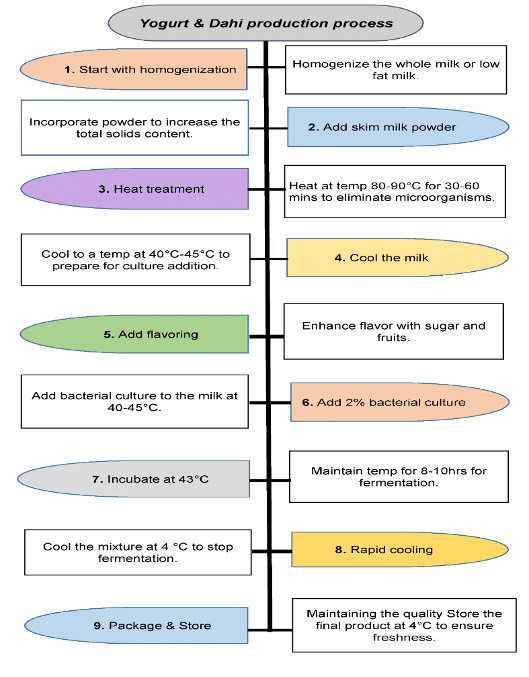
Dahi, while similar to yogurt, differs slightly in its production process. It is traditionally made from cow's milk, buffalo's milk, or a blend of both, using a small portion of previously fermented dahi as a starter culture. This starter contains Lactobacillus bulgaricus and Streptococcus thermophilus in a 1:1 ratio (Ge et al., 2024). Additionally, the fermentation of dahi involves a wider range of microorganisms, including Streptococcus thermophilus, S. lactis, S. cremoris, Lactobacillus bulgaricus, L. acidophilus, L. plantarum, and lactose-fermenting yeasts (Sarkar et al., 2012). The step-by-step process of yogurt production has been detailed (Lourens and Viljoen, 2001) (Figure 3).
3.2 Milk standardization
According to the Codex Alimentarius Commission, yogurt must contain at least 2.7% protein and no more than 15% fat (Gómez-Gallego et al., 2018). To meet these requirements, the FAO/WHO standards specify that the milk used for yogurt production should have a minimum solid-not-fat (SNF) content of 8.2% and a milk fat content of 3% (Table 1).
Table 1. Codex-compliant yogurt, composition requirements and stabilizer effects.
To achieve the desired characteristics of yogurt—such as texture, mouthfeel, appearance, and viscosity, as well as to prevent whey separation—stabilizers like pectin and gelatin are commonly added to the yogurt mix. However, improper stabilization can lead to quality issues: over-stabilization results in a "jello-like" springy texture, while under-stabilization causes a "runny" consistency and whey separation (Lee and Lucey, 2010).
3.3 Homogenization
Homogenization is a vital processing step, especially for high-fat yogurt, as it reduces the size of fat globules to under 1 µm, ensuring they are evenly distributed throughout the yogurt. This process prevents the formation of a separate creamy layer on the yogurt’s surface and enhances its overall consistency (Silva et al., 2022) (Figure 4).

The homogenization process is conducted using a homogenizer or viscolizer, which forces milk through narrow openings at high pressure. This process breaks apart the fat globules due to intense shearing forces (Weerathilake et al., 2014).
3.4 Pasteurization
Heat treatment offers several advantages in yogurt production (O'Rell and Chandan, 2013). It eliminates microorganisms in the milk or yogurt mixture, preventing disruptions in the controlled fermentation process. Additionally, it denatures whey proteins, enhancing the yogurt's body and texture, and releases compounds in the milk that promote the growth of starter culture microorganisms. Heat treatment also increases certain ingredients to achieve the necessary conditions for forming gels and protein lattices, which influence the final texture and viscosity of the product. Furthermore, it removes dissolved oxygen from the milk, benefiting the starter culture, which is sensitive to oxygen (Lee and Lucey, 2010). Common time-temperature combinations for batch heat treatments in commercial yogurt production include heating at 85 °C for 30 minutes or at 90-95 °C for 5 minutes (Aslani et al., 2024).
3.5 Inoculation and fermentation
After heat treatment, the yogurt mixture is cooled to a temperature range of 43-46 °C before adding the yogurt starter culture, which is typically added at a concentration of about 2% (v/v). This temperature range is ideal for the thermophilic bacteria in the starter culture. The standard yogurt culture generally consists of Streptococcus thermophilus and Lactobacillus delbrueckii subsp. bulgaricus, usually in a 1:1 ratio (Arab et al., 2023; Weerathilake et al., 2014).
3.6 Storage
The storage stability and shelf life of yogurt are influenced by its physical, chemical, and microbiological properties (Sofu and Ekinci, 2007). Fungal contamination, particularly from yeasts, is a primary factor in yogurt spoilage, as the low pH environment promotes their growth. Additionally, factors such as substandard milk quality, inappropriate starter cultures, unsanitary equipment, and improper incubation temperatures can further compromise yogurt quality.
To maintain freshness, yogurt should be refrigerated immediately after purchase. A clean spoon must be used when transferring yogurt to a bowl, and to prevent contamination, any unused portion should not be returned to the original container (Pal et al., 2015). Yogurt produced in accordance with good manufacturing practices (GMP) should contain no more than 10 yeast cells and can typically be stored for 3–4 weeks at 5 °C. However, yogurt with an initial yeast count exceeding 100 CFU/g is prone to rapid spoilage (El-Bakri and El-Zubeir, 2009).

4. Types of yoghurt and dahi
Yogurt is typically classified into three main categories (De-Vuyst and Degeest, 1999). A wide variety of commercially available yogurt types include non-fat yogurt (99% fat-free), low-fat yogurt, and plain yogurt. Additional variations, such as skimmed yogurt, partially skimmed yogurt, sweetened yogurt, fruit yogurt, and flavored yogurt, are also available (Table 2 and 3).
Table 2. Different types of yoghurt.
Table 3. Different types of dahi (De-Vuyst and Degeest, 1999).
4.1 Composition and Nutritive value of Dahi and Yoghurt
Dahi is one of the oldest fermented milk products and is the most widely consumed in Bangladesh. Both yogurt and dahi are excellent sources of B vitamins, proteins, and calcium, which are more easily absorbed by the body compared to fresh milk (Saleem et al., 2024). Dahi is particularly rich in folic acid, riboflavin, and thiamine, and it contains the enzyme β-galactosidase, which aids in lactose digestion, making it especially beneficial for lactose-intolerant infants (Kaur et al., 2020). Additionally, dahi provides conjugated linoleic acid (CLA) and other essential amino acids, which are believed to possess anti-carcinogenic properties and offer further therapeutic benefits.
Table 4. Nutritional composition of traditional dahi.
Yogurt is considered a nutrient-rich food, but its nutritional profile is influenced by added ingredients and production methods. As a dairy product, yogurt is an excellent source of high-quality protein and provides a highly bioavailable form of calcium (Sumi et al., 2023). It may also contribute to the intake of iodine, phosphorus, potassium, riboflavin (B2), and vitamin B12. Although yogurt is not naturally a source of vitamin D, some varieties are fortified with it, and certain products are enhanced with additional calcium, allowing them to make claims about bone health. The fat content in yogurt can vary significantly, ranging from "fat-free" versions with less than 0.5% fat to low-fat options with less than 3% fat, while some Greek-style yogurts contain up to 10% fat (Table 4).
Several types of yogurt are officially recognized as a "source" or "high in" essential micronutrients, providing 15% or 30% of the EU's recommended daily allowance, respectively. For example, all yogurt types are a source of calcium, most (except full-fat fruit yogurt) are a source of phosphorus, low-fat and creamy varieties provide riboflavin, and all types except thick and creamy yogurt are high in iodine. Therefore, yogurt can play a valuable role in helping vulnerable populations meet their micronutrient requirements (Ruxton, 2015).
Table 5. Nutritional composition of different types of yogurts. (Weerathilake et al., 2014).
Dahi and yogurt, though often used interchangeably, differ significantly in their preparation, microbial content, and physical properties. Dahi is a traditional Indian fermented milk product made by adding a small amount of curd from a previous batch to warm milk, which allows fermentation by a mix of naturally occurring lactic acid bacteria. In contrast, yogurt is produced using standardized bacterial cultures, specifically Lactobacillus bulgaricus and Streptococcus thermophilus, under controlled temperatures and conditions. As a result, yogurt has a smoother texture and consistent taste, while dahi can vary in flavor and texture depending on factors such as milk quality and ambient temperature (Table 6).
Table 6. Differences between dahi and yogurt.
4.3 Probiotic dahi or yogurt
Probiotics have been incorporated into yogurt for many decades, but the term "probiotics" was first introduced in the 20th century (Caramia and Silvi, 2011; Bhuiyan et al., 2010). Lilly and Stillwell (1965) coined the term to describe substances produced by one microorganism that promote the growth of another. Fuller (1992) later refined this definition, describing probiotics as "live microbial feed supplements that positively impact the host by enhancing its intestinal microbial balance," emphasizing that probiotics must be viable to be effective. Yogurt serves as an ideal medium for delivering probiotics, providing high viability of beneficial bacteria. Bio-yogurt, in particular, is an excellent source of probiotics like Lactobacillus acidophilus and Bifidobacterium bifidum, which are commonly used in the dairy industry. The consumption of probiotics is believed to support overall health, improve vitality, and alleviate intestinal issues. Specific therapeutic benefits include the prevention of urogenital infections, relief from constipation, protection against diarrhea, and a reduction in the risks of conditions such as hypercholesterolemia, colon and bladder cancer, and osteoporosis (Salama and Bhattacharya, 2022; Weerathilake et al., 2014).
Yogurt has been shown to possess antibacterial properties, particularly against pathogens resistant to conventional antibiotics. The bacterium Lactobacillus bulgaricus exhibits antibacterial activity and produces a broad-spectrum antibiotic known as 'bulgarican' (Deeth and Tamime, 1981). Regular consumption of yogurt by healthy women has been found to enhance the cellular immune system. Additionally, yogurt intake has demonstrated positive effects in preventing several diseases, including cardiovascular conditions, diabetes, immune response enhancement, maintenance of microbial balance, and reduction of renal disorder risk (Kaur et al., 2020; El-Abbadi et al., 2014). In children, consuming more than 60 g of yogurt per day is linked to improved diet quality, higher nutrient intake, reduced pulse pressure in younger children (ages 4–10), and lower HbA1c concentrations in older children (ages 11–18), indicating better cardiometabolic health (Lordan et al., 2018). Yogurt made with Streptococcus thermophilus and Enterococcus faecium strains has shown a notable reduction in serum cholesterol levels (8.4%) (Ağagündüz et al., 2021).
The World Gastroenterology Organization's guidelines on probiotics and prebiotics, published in 2011, reaffirmed that the effectiveness of probiotics depends on the specific strain and dosage, debunking the misconception that all yogurt varieties qualify as probiotic yogurt. For probiotic fermented milk to provide the intended health benefits, the probiotics must remain viable and be present in adequate quantities at the time of consumption. It is recommended that these products contain at least 106–107 CFU/g or CFU/mL to be effective, and consumers should aim to consume around 100g/day to ensure approximately 109 viable probiotic cells reach the intestines (Dinkçi et al., 2019).
Mechnikov proposed the concept of "longevity in yogurt," suggesting that the lactic acid bacteria (LAB) present in yogurt could modify the intestinal microbiota, replacing harmful microorganisms and thereby preventing intestinal decay and aging (Mowat, 2021). In 1919, Isaac Carasso, the founder of Danone, began the industrial production of fermented milk and marketed the first Lactobacilli-fermented yogurt products (Zhang et al., 2023). LAB may also release bioactive compounds in fermented milk, such as γ-aminobutyric acid (GABA), which positively impacts human health (Lee and Lucey, 2010). GABA, a non-protein amino acid, is formed by the decarboxylation of l-glutamic acid, a process catalyzed by the enzyme glutamic acid decarboxylase (GAD) (Yogeswara et al., 2020). GABA plays a role in neurotransmission and offers various physiological benefits, including antihypertensive, relaxing, anti-insomnia, and antidepressant effects (Czapski and Strosznajder, 2021).
Strains such as Leuconostoc can produce compounds like diacetyl, ethanol, and acetic acid during fermentation, while Lactococcus lactis generates diacetyl and acetoin (Duru et al., 2018). These strains contribute to the characteristic butter-like flavor of yogurt. Additionally, Lactobacillus casei DN-114 001, commonly found in commercial fermented milk products like Danone's Actimel, is added to yogurt to enhance its typical flavor and aroma (Yadav et al., 2015). The volatile compounds in yogurt, including acetic acid, acetoin, butyric acid, caproic acid, 2-pentanone, and 2-butanone, contribute to its flavor profile; however, typical yogurt volatiles may be absent in some formulations. Research by Rašić and Milanović (1966) demonstrated that adding Streptococcus diacetylactis cultures can improve the flavor of yogurt (Zhang et al., 2023).
4.4 Purchase frequency of yoghurt/Dahi in association with education-wise preference
The purchasing characteristics of customers can help explain how consumers derive satisfaction and develop loyalty to a product. Therefore, information about consumer demographics and satisfaction with yogurt is essential for making informed marketing decisions. The bar charts below indicate that 13.64% of individuals have attained only a metric-level education, while 9.09% have completed intermediate education. Additionally, 13.64% hold a bachelor's degree. The majority, 63.64%, possess qualifications beyond the bachelor's level (Raza et al., 2020) (Figure 6).

The chart below illustrates yogurt purchasing preferences in relation to education level. Among the 18 respondents, all have completed 14 years of education. Out of these, five purchase yogurt daily, three buy it weekly, and ten purchase it on other days. Additionally, eight respondents choose yogurt primarily for its taste, while ten prioritize quality. Notably, 17 respondents buy yogurt for others, including friends and relatives (Raza et al., 2020) (Figure 7).

5. Health impacts of dahi/yoghurt
Consumed for centuries, yogurt is celebrated for its numerous health advantages (Yoda et al., 2014; Bourlioux and Pochart, 1988). Typically regarded as a nutritious fermented food, yogurt is easily digestible and provides high biological value proteins along with a rich supply of energy. It is also an excellent source of essential amino acids and various micro and macronutrients necessary for maintaining optimal health (Chandan et al., 2017).
Both dahi and yogurt are rich in calcium and serve as significant sources of high-quality protein. Calcium is crucial for maintaining bone density and strength throughout life, with adults requiring about 700 mg of calcium daily. Additionally, yogurt's high potassium content helps regulate blood pressure, contributing to overall cardiovascular health. It offers anti-diabetic benefits, boosts immune function, maintains microbial balance in the gut, helps prevent osteoporosis, alleviates conditions such as pruritus, canker sores, aphthous ulcers, diarrhea, and bleeding piles, and even exhibits antibacterial and anticancer properties. Consuming yogurt daily has been shown to enhance the cellular immune system in healthy women (El-Abbadi et al., 2014).
Fortified dahi, enriched with alpha-linolenic acid (an omega-3 fatty acid), phytosterols, and polydextrose (a soluble fiber), maintains desirable physico-chemical and sensory qualities. The fortification does not affect fermentation or shelf life and ensures good consumer acceptability. This suggests that dahi can serve as a functional food with enhanced nutritional and therapeutic benefits, particularly due to the presence of alpha-linolenic acid, which promotes heart and metabolic health (Veena et al., 2017).
5.1 Bone health
Frequent consumption of milk and dairy products offers significant benefits for bone and dental health. Cow’s milk is an essential source of calcium and other vital minerals (Prentice, 2014), as well as vitamins that support bone health (Kubicová et al., 2019). These products provide several key nutrients necessary for bone development in children and help prevent osteoporosis and fractures in adults. The European Commission emphasizes that the calcium, protein, phosphorus, manganese, magnesium, vitamin D, zinc, and vitamin K found in milk are crucial for maintaining healthy bones. Notably, phosphorus aids in calcium absorption and utilization, making its balance with calcium essential for proper bone formation (Pereira, 2014).
Yogurt is also rich in nutrients that contribute to optimal bone health, including calcium, protein, magnesium, zinc, and phosphorus. The calcium in yogurt is highly bioavailable, as the acidic environment helps ionize the calcium, enhancing its absorption in the intestines (Ruxton, 2015).
5.2 Cardiovascular disease
Cardiovascular diseases (CVD) affect the heart and blood vessels, including conditions such as coronary artery disease (CAD), cerebrovascular disease, peripheral artery disease, and aortic atherosclerosis. These diseases are characterized by atherosclerosis, an inflammatory condition that leads to the hardening and narrowing of blood vessels, the accumulation of plaque on the vessel walls, and eventually plaque rupture, which can trigger acute events. CVD accounts for approximately 30% of all deaths worldwide, including in the United States. In the U.S., one in every four deaths, or roughly 610,000 people annually, is attributed to heart disease (Bhupathi et al., 2020; Ivey et al., 2011).
Cow’s milk contains substantial amounts of potassium, as well as saturated fat and cholesterol, the excessive intake of which can increase the risk of heart disease. For individuals with high blood pressure or long-term cardiovascular disease, it is advisable to monitor cholesterol intake and consider low-fat and low-salt milk and dairy alternatives (Kubicová et al., 2019). Research by Astrup (2014) found that fermented yogurt products led to a 4% reduction in total cholesterol and a 5% decrease in LDL cholesterol levels. In a randomized controlled trial involving overweight adults over eight weeks, yogurt fermented with Enterococcus faecium and Streptococcus thermophiles resulted in an 8.4% reduction in LDL cholesterol (Pourrajab et al., 2020).
Research has shown that individuals who regularly consume yogurt have a lower risk of developing high blood pressure and, on average, have lower systolic blood pressure compared to non-yogurt eaters. High blood pressure, often referred to as the "silent killer," is a major risk factor for stroke and heart disease, as it typically has no symptoms. A study by the American Heart Association, conducted over 15 years, revealed that consuming at least 2% of daily calories from yogurt reduced the likelihood of developing high blood pressure by 31% (Yadav et al., 2015).
5.3 Type 2 diabetes (T2DM)
Diabetes has emerged as a global health crisis with significant health, social, and economic consequences. Over the past thirty years, the prevalence of Type 2 diabetes mellitus (T2DM) has more than doubled (Kalergis et al., 2013). In 2019, the global prevalence of T2DM was 9.3%, affecting approximately 463 million people. It is projected that this figure will rise to 10.2% (578 million people) by 2030 and to 10.9% (700 million people) by 2045. T2DM is more common in adults and accounts for about 90% of all diabetes cases. This persistent condition is characterized by elevated blood sugar levels resulting from insulin resistance or insufficient insulin secretion by the pancreas's β cells (Ağagündüz et al., 2021).
Individuals with diabetes also face an increased risk of peripheral arterial disease, atherosclerotic cardiovascular disease, and cerebrovascular disease, along with frequently experiencing abnormalities in lipoprotein metabolism and hypertension. Chen et al. (2014) conducted a meta-analysis exploring the relationship between dairy consumption and its effect on reducing the risk of T2DM. They found that a daily consumption of 28.0 grams of yogurt was associated with an 18% reduction in the risk of developing T2DM. Studies have indicated that specific nutrients in dairy products, such as magnesium, calcium, and certain fatty acids, may contribute to a decreased risk of T2DM (Yadav et al., 2015).
5.4 Obesity
Obesity has emerged as a major public health concern, reaching epidemic levels globally and affecting not only industrialized nations but also developing countries. Every year, at least 2.6 million individuals are at an increased risk of heart attacks or death due to obesity-related health issues (Mohajan and Mohajan, 2023). A study by the University of Tennessee, Knoxville, found that regular consumption of yogurt can help reduce abdominal fat. The hormone cortisol, found in the abdominal area, signals the body to store fat around the waist. Yogurt, particularly Greek yogurt, contains a sufficient amount of calcium that helps regulate cortisol levels and prevents the accumulation of fat cells. Additionally, the amino acids in yogurt facilitate fat burning, with Greek yogurt being particularly beneficial for weight management due to its higher calcium content compared to regular yogurt (Yadav et al., 2015).
A recent study by Lu et al. (2016) found that children in the highest dairy intake group were 38% less likely to be overweight or obese compared to those with the lowest dairy intake. Increasing dairy consumption by just one serving per day was associated with a 13% reduction in the risk of being overweight or obese, as well as a 0.65% reduction in body fat percentage (Pereira, 2014).
5.5 Lactose intolerance patients
Lactose intolerance has been linked to insufficient calcium intake and lower bone mineral density, often due to the unnecessary exclusion of milk and dairy products from the diet (Mckinley, 2005). In this context, yogurt serves as an effective alternative for individuals with lactose intolerance, allowing them to benefit from dairy products without experiencing the discomfort typically associated with lactose malabsorption (Weerathilake et al., 2014). While milk fermented with B. bifidus only slightly enhances lactose digestion, yogurt made with S. thermophilus and L. delbrueckii subsp. bulgaricus (the standard yogurt bacteria) results in significant improvements in lactose digestion (Savaiano and Hutkins, 2021).
Yogurt naturally contains less lactose than milk, with typical levels of 3.4% compared to 6.0% in milk (Gaucheron, 2011), making it easier to digest for those with lactose intolerance. This may be due to slower gastric emptying and reduced gut transit (Arrigoni et al., 1994). The European food safety authority has confirmed that live yogurt can be safely incorporated into the diets of individuals with lactose maldigestion, as the cultures in live yogurt help break down lactose into lactic acid, aiding digestion. This makes it safe for dietitians to recommend live yogurt to individuals with lactose intolerance or those avoiding lactose (Ruxton, 2015).
5.6 Gastrointestinal disorder patients
Yogurt has long been recognized for its potential in preventing and treating illnesses in both humans and animals. It is particularly effective in addressing gastrointestinal issues, such as diarrhea—especially in infants—gastroenteritis and constipation. Research has shown that yogurt consumption is significantly beneficial for children suffering from infantile diarrhea, likely due to its role in promoting the growth of healthy gut flora, aided by the easily digestible nutrients in yogurt. It is proposed that the high levels of Lactobacillus in fermented milk may facilitate the deconjugation of bile salts in the small intestine, enhancing the excretion of bile acids in feces and reducing the body's sterol levels (Hepner et al., 1979) demonstrated that both heat-treated and 'live' yogurt have similar beneficial effects on gut health (Deeth and Tamime, 1981).
5.7 Cancer
Dairy products contain a wide range of bioactive compounds that can positively influence carcinogenic effects. These beneficial effects are particularly associated with fermented dairy products, which are rich in compounds like calcium, lactoferrin, lactoglobulin, lactoperoxidase, immunoglobulins, and various growth factors (Keum et al., 2014). These bioactive substances exhibit diverse effects, including anti-carcinogenic properties and promotion of various digestive functions. Research has shown that the consumption of milk products is linked to a 24% reduction in cancer risk, with this protective effect largely attributed to the calcium found in dairy (Pereira et al., 2014). A comparative overview of the health benefits of both dahi and yogurt across various health conditions is summarized in Table 7.
Table 7. Comparative summary of health benefits of dahi and yogurt across different health conditions.
6. Conclusion
Yogurt and dahi are widely consumed fermented dairy products known for their rich nutritional and health-promoting properties. From childhood through adolescence, milk and its derivatives, such as yogurt, are considered valuable functional foods, as their protein, calcium, and other biologically active components support significant muscular, skeletal, and neurological development. Yogurt, along with traditional dahi, offers substantial amounts of essential vitamins, minerals, and high-quality protein. Its adaptability makes it beneficial for people of all ages and an important component in therapeutic diets, particularly those targeting cardiovascular health, bone strength, and weight control. As a dairy product, yogurt or traditional dahi is highly regarded for its nutritional and health-related advantages. However, microbial spoilage in dairy products leads to considerable economic losses in the dairy sector. Traditional dahi or yogurt is likely to maintain its market presence due to its nutritional value, sensory appeal, and potential health benefits. To ensure product safety and freshness, strict hygiene must be maintained throughout production, handling, and distribution. Licensing for small dairy producers should be granted only after confirming compliance with basic good manufacturing practices. Regulatory bodies play a crucial role in overseeing the quality of dairy products, including yogurt. Such advancements will help identify contamination-prone environments in processing facilities that contribute to post-processing contamination of products like yogurt. Continued research and integration into health should focus on dietary patterns and their role as important functional foods in modern nutrition.
Acknowledgements
The authors sincerely acknowledge and appreciate the valuable contributions of all researchers and authors whose publications and studies provided critical insights and information that greatly supported the preparation of this review article.
Source of funding
Not applicable.
Ethical approval
This research is based solely on a comprehensive literature review and did not involve any experimental work with human participants or animals. Therefore, ethical approval was not required.
Data availability
As this study is a review article compiling information from existing literature, no original data were generated or analyzed, and thus data availability is not applicable.
Informed consent statement
Not applicable, as the study did not involve human subjects or data collection requiring consent.
Conflict of interest
The authors declare no conflict of interest.
Authors’ contribution
Conceptualization, and writing the manuscript: Debasree Saha; Drafting manuscript, final version, visualization, review and editing: Kazi Abdus Sobur; In-depth literature review, writing and synthesis of scientific findings: Md. Al-Amin Sarker; Figure formatting, data visualization, and discussion writing: Afrin Binte Afzal Aunanna; Data visualization and and discussion writing: Sheben Chandra Liton;Supervision and writing: Rayhan Ahmmed Pranto. All authors critically revised the content and approved the final version for submission.
